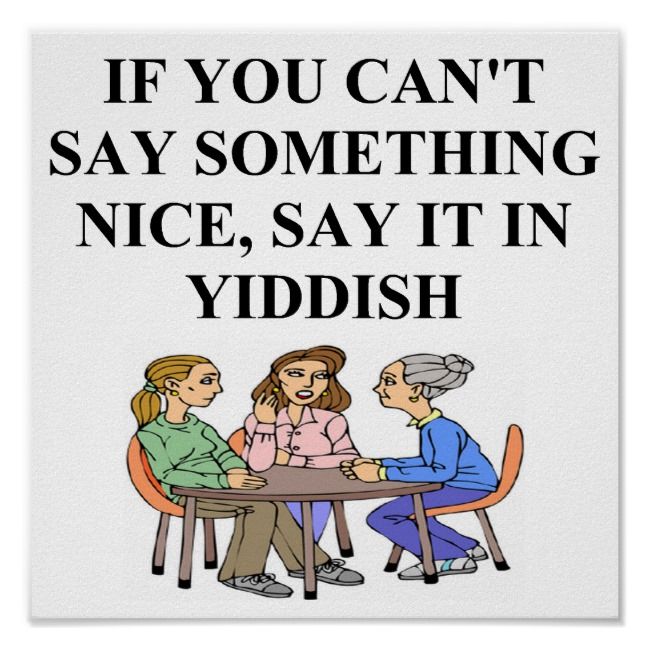
Thus I am ploughing on with Colloquial Yiddish (the textbook), commiserating with Dovid that his family are all totally meshuggeneh (mad) while admiring Chana's extensive apartment.
I have also purchased a Yiddish Dictionary & Phrasebook because it seemed like a good idea. Now, a quick recap: Yiddish is the lingua franca of the Jewish population (not all: in Israel they speak Hebrew). It is a universal way for Jews to be able to communicate with other Jews whose first language might be Polish, German, Lithuanian etc.
My mother who worked for a Berlin-based refugee organisation trying to get Jews out of Germany before Hitler closed the borders, used to go to international conferences where Yiddish was the language employed by delegates and speakers. However, although it is a recognised language in many countries (Sweden, I learned recently), it has no country of its own.
Like its speakers, Yiddish wanders the earth, refusing to be wiped out by events like the Holocaust and allowing itself to be mangled by people like me. This lack of a 'Yiddish country' is reflected in the phrasebook. For instance, search as I might, there are no phrases demanding consular access.
However, on the plus side, the Yiddish Dictionary & Phrasebook does go into great detail about the three big Jewish concerns: food, health and how to complain. Other phrasebooks might have a few instructions on ordering a meal or dealing with an illness ... the Yiddish Dictionary & Phrasebook has PAGES!
Dining out, 9 pages/ Food & Drink,13 pages
If the food is too hot, too cold, not what you ordered, too expensive, too spicy, not spicy enough, if you want to sit over here, over there, by a window, in a corner, you think the waiters are inattentive, too attentive, if you have waited too long, if you want to pay separately, together, by cash, by cheque, by barter ... you will find a phrase.
Health, 20 pages
Similarly, if you have any minor, major, strange, unidentified, possibly fatal, ailment involving some body part, if you are limping, bleeding, allergic, vomiting, anaemic, constipated, need pills, potions, a bandage, a doctor, a hospital, medical attention of any sort there will be a phrase. Believe me. I have read them all.
Armed with these essentials, the Yiddish speaking traveller is equipped to confront the perplexities and problems of modern travel. Thus, if a fellow voyager asks Vos makst du? (how are you?) it is possible to reply with absolute accuracy.
Similarly, an invitation to brontsh (brunch) or vetshere (dinner) can be accepted in the full knowledge that one's ability to kvetch (complain) is amply and fully catered for. Which, in essence, is all the Yiddish speaker needs to know.