Saturday, 11 April 2015
The Wizard's Cauldron - Author Interview Blog: Author and blogger Carol Hedges is...around The Ca...
The Wizard's Cauldron - Author Interview Blog: Author and blogger Carol Hedges is...around The Ca...: Inhabitants of the Twitterverse, at least this little segment of it, will have noticed the effervescent wit of Carol Hedges - author and ...

Friday, 10 April 2015
The PINK SOFA meets writer Catherine Curzon

I met Catherine Curzon on Twitter in her other guise as ''Madame Gilflurt, a glorious Georgian ginbag, gossip and gadabout''. Can't think why I started following her! Catherine blogs about fascinating bits of Georgian life - she is to the 18th century what I am to the 19th. So sit back and let her take you on a journey into her present and the past.
 |
| Madame Gilflurt |
''It’s a real privilege to be invited to
the pink sofa to chat about blogging, writing and the crowned heads of 18th
century Europe!
From my earliest memory (well, not my
earliest, that was breaking my arm and refusing to take my purple anorak off),
my life has been full of stories. I was born in Nottinghamshire and growing up
spent many long hours and the cottage on the edge of Sherwood Forest where my
grandparents lived. My granddad was a great one for telling stories and he
would keep us children entranced for hours with tales of outlaws in the forest,
of ghosts flitting in the shadows and highwaymen on the roads.
It was my granddad who awakened my love
of stories and when my gran bought me a paper dress up doll of Marie Antoinette
and some generic bewigged courtiers, that was that and I was hooked. I loved
the glamour of the costume and jewels and the gruesome tragedy of her demise and
for a time, possibly quite a worry time for my parents, headless queens started
popping up in my childhood drawings wherever I could shoehorn them in!
I have been writing fiction for a long
time, everything from teenage horror to romantic thriller and onto timeslip yet
I never submitted them for publication, sure that I would probably be rejected.
I kept on writing though, because I had these stories that I felt like I had to
tell, even if I was the only person reading them. I seemed only natural that I
write something set in the period I loved and so, about four years ago, I
entered National Novel Writing Month with a story of Georgian prostitutes and
murderous peers.
As soon as I started writing, I found
myself wishing I had tried my hand at historical fiction long ago. I love the
sense of being taken back in time, the chance to lose myself in the 18th
century and once NaNoWriMo was finished, I kept on writing. That novel
eventually became The Mistress of Blackstairs, which I am inching ever
closer to finishing but which has, for reasons which will become clear later
on, had to take a backseat for a few months.
Many people have commented that writing
historical fiction must be a nightmare of research but that couldn’t be further
from the truth. For me, research is still an utter joy; there is always
something new to discover about this remarkable era, a little gem in a
gazetteer or a nugget of gossip in the letters of an apparently respectable
lady!
I’m not sure what it was that prompted
me, with my terror of letting anybody read my work, to start blogging, but I
took the plunge in summer 2013 and I’m so glad I did. Each day I publish a
story from the 18th century and I hoped that maybe a couple of hundred people might
visit but the reception has been wonderful, far more than I could have hoped!
My approach to blogging has to be super disciplined because I post daily so I
gather notes, inspiration and stories from everywhere. As the blog has expanded
I’ve been privileged to feature guest posts from the world of literature and
academia and made wonderful friends all over the world and I’ve learned so much
about the era that is my passion.
Despite the new characters I’ve
uncovered, my favourite figure from the Georgian world has not changed. For
many years I have had a very soft spot for Henry Fielding, a character I never
tire of. In so many ways, Fielding captures everything was great about the long
18th century. Scandalous, irreverent, colourful and ground-breaking, his life
is one that would seem far fetched in fiction!
At the close of 2014, I was contacted by
a representative from Pen and Sword Books and, to cut a long story short, I am
now under contract with them to write Life in the Georgian Court, a
breathless romp through tales of 18th century royal scandals, marriages, grisly
deaths and more! This truly is a dream come true and I still can’t quite
believe it; for someone who set up a blog with the intention of giving it a few
weeks to see how it went, it feels incredibly surreal and utterly wonderful. I
have so many ideas for future works both fiction and non fiction, but for now,
I am totally immersed in the worlds of the Bourbons, the Hanovers and more.
I may not be drawing headless queens
whenever I get the chance but I can guarantee you that Marie Antoinette will
definitely be there in the book, both with her head and without it!''
Glorious
Georgian ginbag, gossip and gadabout Catherine Curzon, aka Madame Gilflurt, is
the author of A Covent Garden
Gilflurt’s Guide to Life. When not setting quill to paper, she
can usually be found gadding about the tea shops and gaming rooms of the
capital or hosting intimate gatherings at her tottering abode. In addition to
her blog and Facebook,
Madame G is also quite the charmer on Twitter. Her first
book, Life in the Georgian Court, will be published by Pen and
Sword Books in 2016.
Monday, 6 April 2015
Bang on Target (Adventures of L-Plate Gran)

Little G has now been in nursery for six weeks. Enough time to generate her first report, or EYFS Progress Check. (No, I don't know what it means. Don't ask). As a renegade student all my life who frequently got reports that began 'Carol has made an inauspicious start to the term' my amazement knows no bounds.
That a baby has to be assessed for 'Personal Social & Emotional Development' is beyond my comprehension. And then there are the Targets. Not only ''In the setting'' but also at home, there are Targets. I am supposed to be singing 'Heads,Shoulders, Knees & Toes' to her to help her name parts of the body. So that's my attempt to teach her the Alabama Song from Mahagonny out of the window for a start.
There are all sorts of other things that I/You must be mad are supposed to be doing. Yes, I'm sure her lovely nursery is only obeying orders, but I have no intention of spending my days with my granddaughter checking that I am working towards a set of arbitrary targets imposed by some misguided educational wonk who needs to go out and get a life.
Instead I shall continue to play, potter round with her, ride on buses with her and share illicit picnics on You must be mad's newly tiled kitchen floor. Until such time as I am assessed as part of her 'Primary care-giving team'. Given my academic record the result, sadly, is a foregone conclusion.
To be continued ... ....
Saturday, 4 April 2015
Book Critics - What Are They Good For? Absolutely Nothing!

At last, someone (Professor Michael Luca) has come out and said what we've always known: there is absolutely no difference in the quality and accuracy of a book review by an 'ordinary' reader on Amazon, and a professional book critic. Moreover (and we all knew this, as well) critics were more likely to praise a book when the author was well-known/a prizewinner/had garnered press-coverage/ was connected to some media outlet.
I am leery of reviews, whoever writes them, ever since Dark Side of Midnight was compared unfavourably on Amazon to a certain well-known children's writer in the same field. This happened so many times, that the words 'stitch-up' came to mind. I have also read reviews of books by writers whom I know share the same publisher/agent. Or where some personal spat is being used to exact revenge.
The fakery of the 'professional' critic was no more clearly exposed than when Robert Galbraith, crime fiction writer, whose first novel had been rather indifferently received, was exposed as J K Rowling. Cue for more 5 star plaudits than you or I have had hot dinners. And it is always ironic when Sunday Review sections ask writers to suggest their summer/Christmas best reads how often the same old familiar authors appear in different papers. No money or favours have been proffered ... of course not.
Both my Victorian Crime novels have garnered a slew of 'ordinary' reader reviews on Amazon, veering from Five Star 'Best book ever' to One Star 'Didn't like it'. They've also had a couple of mainstream reviews in The Lady, The Mitford Society Magazine and similar publications. Honestly, if you switched reviews, you'd be hard put to tell who was 'the professional' and who 'the ordinary reader'. (Well, except in the case of the One Star people.)
Charlotte Bronte was equally sceptical. She wrote in 1850, over the sisters' decision to adopt the pseudonyms Currer, Ellis and Acton Bell: 'We had the impression that authoresses are liable to be looked on with prejudice; we had noticed how critics sometimes used for their chastisement the weapon of 'personality' and for their reward, a flattery which is not true praise.'
Interestingly, when Wuthering Heights was first published in 1847, Ellis Bell was praised for the strength and passion of 'his' tale. As soon as it was revealed, however, that 'Ellis' was in fact 'Emily', the reviewer slated the book as being 'odious and abominably pagan'.
Nul points, that critic.
Monday, 30 March 2015
The Adventures of L-Plate Gran: Intimations of Mortality

There is nothing like taking charge of a small baby to remind you that you are not immortal. From the moment Little G was placed in my inadequate care by You must be mad, I have had a cold, accompanied by a cough, occasionally joined by a sore throat and a hoarse voice.
Little G has the same, so we cough and splutter our way around town, occasionally stopping to share a fag (no, really - we don't). After a few weeks of this and with no sign of improvement, I plucked up courage and made a doctor's appointment. Relieved to be told I do not have lung cancer (never Google your symptoms), but surprised to be told instead that I have succumbed to 'pediatric germs'.
Apparently whatever Little G picks up in nursery she brings back and distributes generously amongst her nearest and dearest. Which also explains why You must be mad has the same thing. Our delicate immune systems are not ready for the nappy'd bugs currently attacking them. Thus we are ill. All of us. All of the time.
Once Little G develops her own immunity, and the weather becomes warmer and drier, we will be better, I was told. My quite reasonable request for a prescription for a 3 week family holiday in Tuscany was turned down. You just can't get anything on the NHS nowadays.
To be continued ... ...
Saturday, 28 March 2015
Does a Degree in Creative Writing make you a Creative Writer?

Flicking through a couple of writing mags, I'm struck by the number of creative writing courses now on offer. Anything from an MA to a BA to a short series of lectures. Even the Guardian is now cashing in and running all day sessions on how to write various types of genre fiction, non-fiction, blogs etc.
Many of these courses come with glowing endorsements from former students, some of whom have gone on to write best sellers/make small fortunes/land top jobs in the media profession. Call me Ms Cynic if you will (please do...) but I view the whole creative writing business with enough skepticism to refloat the Titanic.
I do not have a degree in creative writing. I don't have a certificate saying I attended any courses. Hell, I don't even have a badge saying writer. I just learned my craft as I wrote. Book after book after book. And as I read. Book after book after book. Because reading and writing was all I ever wanted to do.
So here's my take on the proliferation of degrees, second degrees, courses and 'Be a creative writer' stuff:
You can learn the structure of writing: how to balance sentences; how to vary action and description. You can learn how to construct characters, and how to write dialogue. You can learn grammar and punctuation. BUT that spark, that inner drive, that ''talent" that separates the real writer from the creative writing clone is innate. You are born with it. And if you ain't got it, you ain't.
And as for the ''best seller'' newbie writers, who have probably landed their publishing contract on the back of their writing tutors' connections to various publishing houses, (shock horror .. did you not realise that's how it works?) once they leave the cosseted hothouse world of the degree course, and let go of their mentor's hand, it is rare to see them flourish beyond that first carefully nurtured book.
The finest writers in the canon of literature: Shakespeare, Keats, Austen, Dickens, Tolstoy etc never went on a creative writing course, and never passed a single exam in creative writing. Would their works have been better if they had? I think not.
Thursday, 26 March 2015
WHAT DOESN'T KILL YOU: Victorian Food

In 2013, we discovered that horse meat, sometimes as high as 80%, had been added to our food. People were shocked and outraged. Cheap burgers and meat products were removed from supermarket shelves and even the 'reputable' supermarkets found they were not immune from the scandal as expensive ready meals were tested and found to contain meat from more than one animal.
None of these products would have harmed or killed us outright - indeed in many countries, horses are slaughtered for the table. It was the deception, and the realization that we had less control over the contents of what we put on our plate that caused such anxiety.
In Victorian times, food was adulterated to a far more dangerous extent. There was no Food Standards Agency, no Inspectors to discover and prosecute the offenders. Reading what was found in some everyday foodstuffs, I am amazed that people survived as long as they did! And that's apart from the lack of universal refrigeration which made meat go ''off'' very quickly in the Summer months.
OK, those with weak stomachs .... do not read on!
* Sulphate of iron was added to tea and beer.
* Wine and cider both contained lead.
* Milk was frequently adulterated with chalk and watered down.
* Coffee was mixed with acorns.
* Sugar was mixed with sand.
* Gloucester cheese had red lead added to give it that distinctive colour.
* Butter, bread and gin all contained copper.
* Red lead was also used to colour red sweets.
Like today, street food played a large part in the Victorian diet. In 'Diamonds & Dust' I write about an elderly couple who ran a coffee stall. There were lots of these all over London as most offices and places of business did not have a canteen. As well as coffee, they sold bread and butter and ham sandwiches, which were a Victorian favourite. Amazingly there were whole stalls devoted entirely to ham sandwiches. Street stalls also sold soup and baked potatoes.
Seasonal food appeared on the streets as the year progressed. Watercress, strawberries and cherries were often sold by small girls, who turned up at Covent Garden in the very early morning to buy them. Muffins were sold by muffin men who rang their bells to announce their presence. Anybody apart from me remember the children's song: ''Have you heard the Muffin man ...who lives down Drury Lane''? Roast chestnuts were sold in paper twists off a brazier in the colder weather, as was cat's meat ...which was sometimes bought for human consumption as it was cheaper than butcher's meat.
In 1860, the government passed the Food and Drugs Act in an attempt to stamp out widespread food adulteration, but although the quality of food gradually improved, there was still no means of checking the street vendors or mass suppliers. Ring any bells? In 1868, machine produced tins of food began to appear for the first time on grocers' shelves. And of course, that opened up a whole new can of worms ...
Tuesday, 24 March 2015
Getting Crotchety in the Library (The Adventures of L-Plate Gran)

When I was Little G's age (1951 if you MUST know) babies were left in playpens or Silver Cross prams, preferably outside in all weathers, until they went to school. Fast forward 64 years and it's a totally different world.
Before she left London, Little G had been to Baby Massage, Baby Yoga, Baby Art and Baby Cinema. And then there was all the musical stuff: Baby Bach, Mini Mozart and Tiny Tchaikovsky. OK, I made up the last two, but you get the picture.
As I don't want her to inhabit the same cultural wilderness that I grew up in, we have started rocking up to Baby Rhyme Time at the local library. The best way I can describe it is Last Night of the Proms for under 2s, conducted by a nice children's librarian and a large blue teddy bear.
The audience consists of a variety of screamers, crawlers, shufflers, lurchers, topplers and their minders: a few yummy mummies, one lone daddy and a lot of nannies and Eastern European au pairs. Now augmented by me and Little G
Little G loves it. She sits on the floor, propped up by me in case of spillage, and waves our bus ticket enthusiastically while burbling something that bears no resemblance whatsoever to what the librarian and the rest of the adult participants are singing.
Because we SING. Oh yes. Songs about speckled frogs, songs about currant buns, songs about body parts, and a song about some elderly Scottish bloke who had a farm. Cultural wilderness? Not on my watch.
To be continued ... ...
Saturday, 21 March 2015
The PINK SOFA meets ROSALIND ADAM
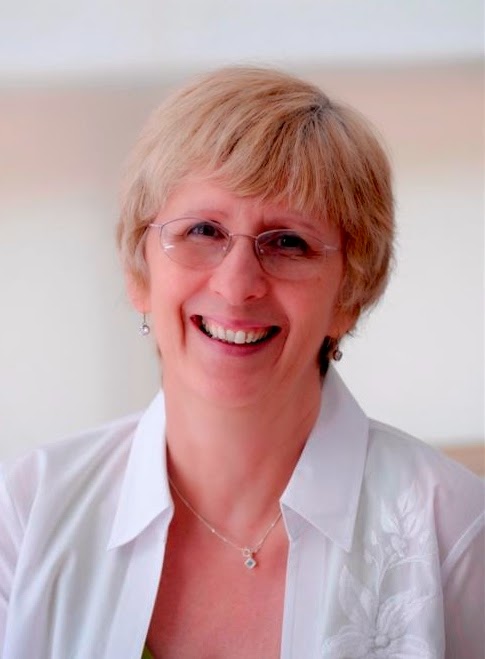
Lovely to have Ros back on The Pink Sofa once more. Ros is a talented writer, poet and blogger. Her best-selling children's book on Richard III is out and selling like hot-cakes, and she is here to share some fascinating facts about this mysterious but much in the news monarch.
A Few Fascinating Facts
Hello Carol and a big thank you for
inviting me onto your delightfully squelchy sofa. I’m sure that The Pink Sofa could
list out a few fascinating facts about all the visitors who have sat here
before me. Oooh! I can see that Pink Sofa is determined to keep the gossip to
itself. What a spoil sport! Never mind. I haven’t arrived empty handed. I’ve
come armed with some snippets about Richard III.
You see, I reckon there’s something
compulsive about snippets, those bits of information that you find in tiny Fact
Boxes in non-fiction books. This is why I was determined to ensure that my
non-fiction books would have copious Fact Boxes.
The Children’s Book of Richard III is my
second non-fiction book. It tells of a life of battles, accusations and
enemies, a bloody death, a body lost for centuries and rediscovered under a
city car park. What’s more, it has colourful, witty illustrations by Alice
Povey.
As I say, I just happen to have with me
today a selection of snippets, five facts to be precise, about Richard III and,
if you enjoy these, there are plenty more in the book!
Fact
Number 1
Richard III’s prayer book is on display at
Lambeth Palace in London. It contains a personal prayer written by Richard,
himself.
Fact
Number 2
On the day Richard’s wife, Queen Anne, died
there was an eclipse of the sun. In those days this was thought to be a bad
omen and bad omen it turned out to be for Richard who was killed five months
later.
Fact
Number 3
 Richard only held one parliament but he
passed a number of laws standardizing weights and measures. In other words, he
decreed that a yard of cloth must measure the same no matter who was selling
it. It seems obvious to us but not to traders in Richard’s time.
Fact
Number 4
In the late 16th century the
Mayor of Leicester had a stone pillar in his garden that bore the inscription,
‘Here lies the body of Richard III, some time King of England.’ So people did
know where he was buried.
Fact
Number 5
The DNA that the scientists used to verify
the recently discovered skeleton was taken from the son of a lady called Mrs
Ibsen. Richard was Mrs Ibsen’s great, great, great, great, great, great, great,
great, great, great, great, great, great, great, great Uncle.
The Children’s Book
of Richard III can be purchased from Amazon at http://www.amazon.co.uk/Childrens-Book-Richard-III/dp/0992930200/ref=asap_bc?ie=UTF8
Tuesday, 17 March 2015
The Adventures of L-Plate Gran: A la Recherche du Snack Perdu

It is impossible to leave the house in the company of a one year old without carrying enough supplies to equip and run a small Antarctic Expedition.
Everywhere we go, we are accompanied by change of clothes, nappies, toys, drink and most importantly, as You must be mad has dinned it into me during my 2 days training that Little G is not to be exposed to the addictive lure of sugary treats: a packet of rice cakes.
Today, we head out to our favourite cafe for a snack break. Behind the counter are treacle tarts, peanut butter chocolate brownies and Portuguese cheesecakes.
I check Little G's supplies. No rice cakes. I have clearly failed in my duties. Worse, I cannot, in all conscience sit munching cake while Little G has nothing to eat. So we bid a sad farewell to the cafe and trudge hungrily back home.
A short while later, I am in the kitchen making Little G's lunchtime cheese sandwich, when I notice that it has gone suspiciously quiet next door. I trek into the living room. No immediate sign of her. Then I hear a rustling behind the sofa. I peer round the side.
Little G is sitting on the floor, the open packet of rice cakes (which must have fallen out of the buggy unnoticed by me) next to her. From her contented expression, it is clear that mass consumption has recently taken place.
I eat her cheese sandwich in stoical silence.
To be continued ... ...
Subscribe to:
Posts (Atom)